Adobe’s New AI Bulk Editing Tool Could Transform Ecommerce Image Workflows

The move signals a major shift toward AI-assisted visual production at scale, especially for online stores, marketplaces, and content-heavy brands.
Adobe Expands Firefly With Bulk AI Editing Features
Adobe has introduced new bulk editing capabilities inside its Firefly ecosystem, allowing users to process massive batches of images using AI-powered automation.
The new workflow is designed to simplify repetitive editing tasks that typically slow down ecommerce teams, marketers, and marketplace sellers. Instead of manually editing images one by one, users can now automate processes such as:
- Background removal
- Image resizing
- Format conversion
- Product image cleanup
- Batch optimization
Adobe says the system is aimed at reducing production bottlenecks while helping businesses maintain consistent visual quality across thousands of assets.
For ecommerce sellers managing catalogs across Amazon, Shopify, Flipkart, Etsy, and other marketplaces, this could significantly reduce editing time.
AI Automation Is Reshaping Product Photography
One of the biggest challenges for online sellers is maintaining visual consistency across product listings.
Marketplace platforms increasingly require strict image dimensions, clean white backgrounds, optimized file sizes, and high-quality product presentation. Adobe’s latest move directly targets this growing demand.
Businesses already investing in AI-driven workflows are also exploring lightweight optimization tools such as background removal, product enhancement, and marketplace compliance checkers to streamline publishing pipelines.
For sellers trying to improve conversion-focused visuals, guides like How to Create Professional Product Images for Amazon & Flipkart have become increasingly relevant.
Why Bulk Editing Matters More in 2026
The creator economy is no longer driven only by influencers. Small ecommerce brands, solo creators, and digital-first businesses now publish visual content at industrial scale.
A single online store may require:
- Multiple aspect ratios
- Social media versions
- Marketplace-compliant uploads
- Optimized compressed formats
- Watermarked variants
-
Mobile-friendly previews
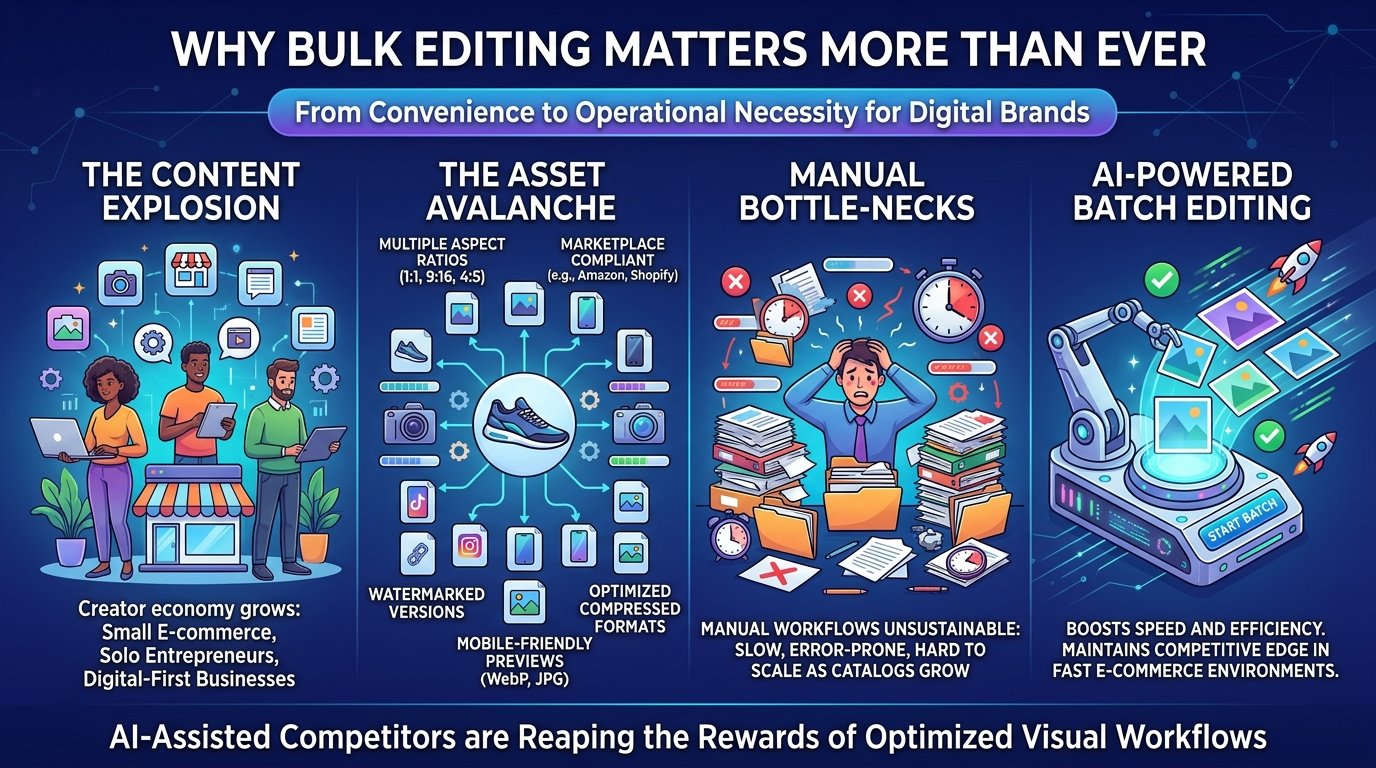
Bulk Editing
That workload becomes nearly impossible to manage manually.
AI-powered batch editing solves a growing operational problem rather than simply offering convenience.
Businesses that still rely on manual workflows risk falling behind faster competitors using automated optimization pipelines.
Ecommerce Sellers Are Prioritizing Faster Image Optimization
Alongside AI editing, image performance has become a major ranking and conversion factor.
Heavy product images can slow down websites, reduce search visibility, and increase bounce rates. As a result, businesses are increasingly combining AI editing with compression and resizing workflows.
Resources like How to Reduce Image Size for Faster Website Loading and How to Resize Images Without Losing Quality are seeing rising search demand from creators and online sellers.
Tools focused on bulk optimization are also becoming more important, including:
Adobe’s Strategy Goes Beyond Designers
Adobe’s latest AI push shows the company is no longer targeting only professional designers.
The real opportunity lies in operational automation for:
Ecommerce Sellers
Businesses handling large product catalogs need scalable editing systems.
Social Media Teams
Brands publishing across Instagram, TikTok, Pinterest, and LinkedIn require rapid multi-format asset generation.
Marketplace Agencies
Agencies managing multiple seller accounts often spend enormous time fixing image compliance issues.
Small Businesses
Smaller brands increasingly want enterprise-level editing without large creative teams.
This broader accessibility is one reason AI image tools are attracting massive search interest across Google Discover, Reddit communities, and creator-focused forums.
AI Editing Raises New Questions About Authenticity
As automated editing becomes easier, brands are also facing growing concerns around over-processed visuals and unrealistic product presentation.
This has increased interest in more natural-looking enhancement techniques and realistic AI workflows.
Articles like AI vs Human: How to Make Your AI Images Look Real and Authentic are becoming increasingly important for creators trying to balance efficiency with trust.
Businesses are also adopting tools such as:
Related Guides & Articles
- GTA 6 Launch Guide Reveals the Settings PS5 and Xbox Players Should Change First
- 10 Free Online Puzzle Games You Can Play Directly in Your Browser
- Best Free Brain Games to Play Online Without Downloading
- Photo Editing Quiz: Test Your Knowledge of Image Editing Basics
- Why Some Small Brands Are Getting More Attention Than Big Companies
- AI Agents Are Getting Smarter: What Can They Actually Do in 2026?
